
Core Movement and Level Flow
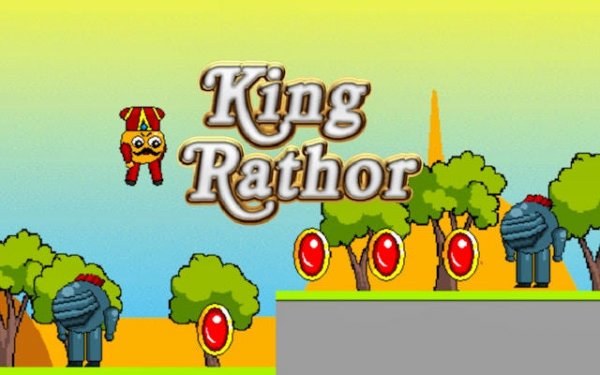
This 2D platformer centers on precise timing and careful navigation. Players control a royal character who must traverse a series of connected environments, each with its own layout of platforms, gaps, and obstacles. The double jump ability is essential for reaching higher areas and crossing wider spaces. Movement feels responsive, allowing for quick adjustments mid-air. Each stage introduces new patterns of hazards that require observation before action. The pacing encourages players to study the environment rather than rush through.
Environment Variety and Visual Themes
The game presents three distinct visual settings: the stone corridors of a castle, the open greenery of garden spaces, and the elevated walkways of tower tops. Each area has a unique color palette and structural design. Castle interiors feature narrow ledges and enclosed rooms. Garden paths offer wider spaces with natural elements like bushes and walls. Tower tops present vertical challenges with platforms at varying heights. These changes keep the visual experience fresh while maintaining consistent gameplay mechanics.
Collectibles and Exploration Rewards
Hidden throughout each stage are special items that reward players who take time to explore. These collectibles are placed in off-the-beaten-path locations, often requiring precise jumps or backtracking to reach. Finding all items in a level adds a layer of completion beyond simply reaching the end. The game does not penalize missed collectibles, making them optional for casual play but satisfying for those seeking full completion. This design supports both relaxed and dedicated playstyles.
Difficulty Progression and Player Support
The challenge increases gradually across the game's stages. Early levels focus on basic movement and simple platform layouts. Later stages combine multiple obstacle types, tighter timing windows, and more complex enemy patterns. The learning curve is gentle enough for newcomers while still providing meaningful tests for experienced players. The control scheme remains consistent throughout, so skill development comes from understanding level layouts rather than mastering complex inputs. This makes the game accessible for short play sessions.
COMMENTS
0 comments